
Robotics and the future of cancer vaccines- an autonomous lab
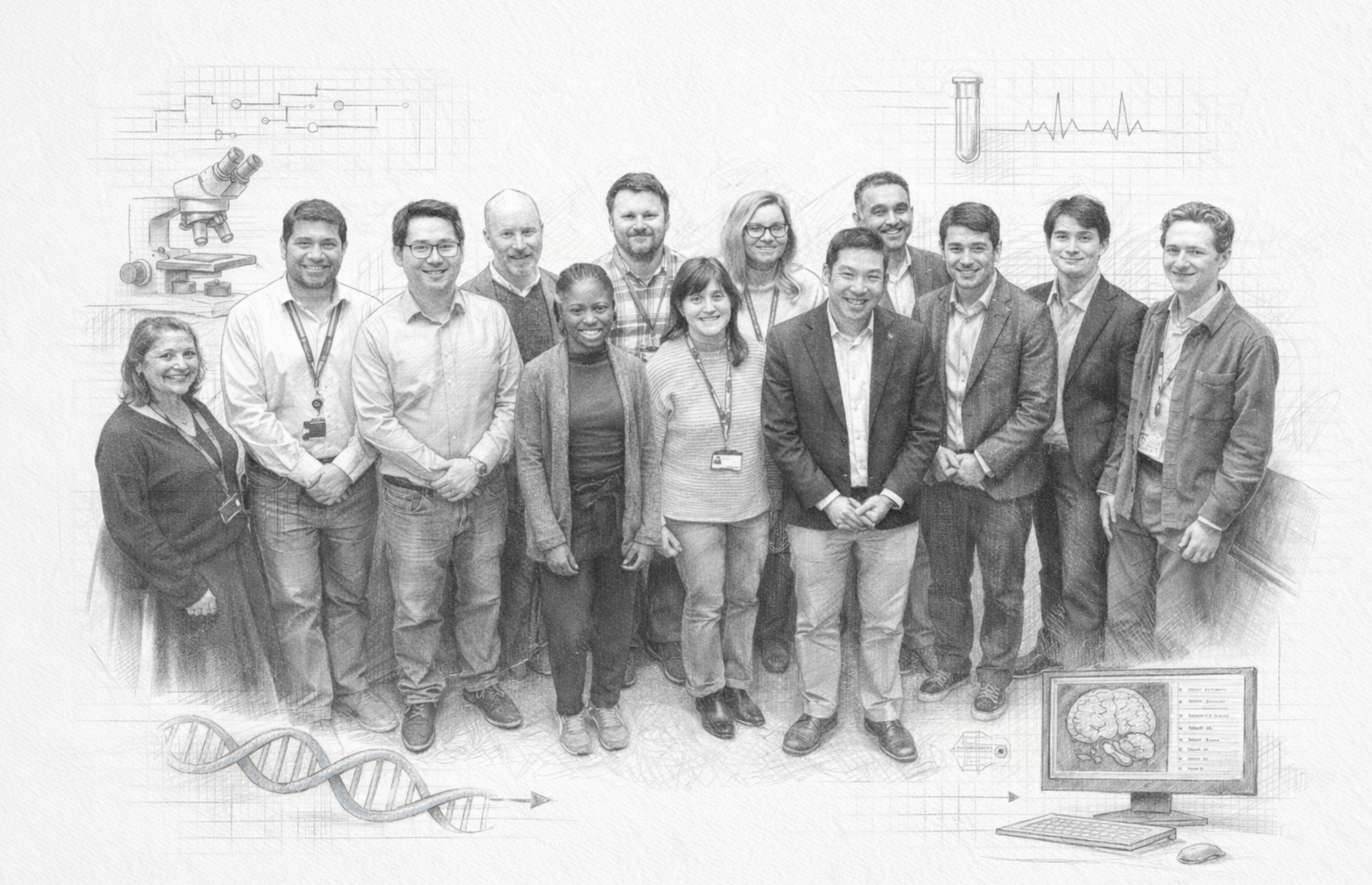
The creation of the first immunology autonomous laboratory dedicated to cancer vaccine research.
We recently had the pleasure of being invited to spend time with the leadership team at the UK’s National Robotarium. It was genuinely fascinating. Walking through the facility and speaking with the scientists and engineers gave a clear sense that we are entering a new phase of scientific discovery. Robotics, artificial intelligence, and advanced experimental science are beginning to work together in ways that feel both powerful and could create so many opportunities.

What stood out most was the great timing. The UK has invested in remarkable infrastructure, and there is an environment where bold ideas can be tested quickly and thoughtfully.
For those of us working on cancer vaccines, this moment feels particularly exciting.
At Oxford, our team has been developing an AI supercomputing model designed to understand the immune system and help identify the most promising tumour targets for personalised cancer vaccines. The aim is simple. Design vaccines that are safer, more precise, and more effective by predicting which tumour mutations can genuinely activate human T cells.

The challenge has never been imagination. The challenge has been speed.
Testing vaccine ideas in the laboratory still takes time. Immunology experiments involve many careful steps, repeated assays, and large numbers of samples. Many researchers remember long evenings in the lab carefully pipetting plates and running experiments late into the evening. That dedication has built modern biomedical science.
Today, there is an opportunity to rethink how this work happens.
One of the ideas we discussed with their leadership is the creation of the first autonomous immunology laboratory. The concept is simple to explain. AI models generate hypotheses about which tumour targets could work as vaccines. Robotic laboratory systems then test those ideas automatically. The immune response data feeds straight back into the AI models so the predictions keep improving.
It becomes a continuous discovery loop.
Imagine a laboratory where robotic systems prepare experiments with perfect consistency. AI systems choose the most promising tumour targets. Immune responses are measured automatically and analysed in real time.
Instead of waiting weeks between experimental cycles, results could appear in days.
Researchers would spend less time repeating laboratory steps and more time thinking about the scientific questions that truly matter.
Gone are the days of DPhil students working until 9pm repeating the same pipetting steps.
Gone are the repetitive laboratory routines that slow down discovery.
In their place comes something simpler and faster. Discovery that feels streamlined, elegant, and focused.

In practice this approach connects three powerful technologies.
First, AI foundation models trained on global cancer genomic datasets that can predict which tumour mutations might stimulate the immune system.
Second, sovereign AI supercomputing infrastructure that allows these models to analyse enormous volumes of biological data.
Third, robotic autonomous laboratories capable of running thousands of immunology experiments with speed and precision.
When these systems work together the pace of science changes.
The process becomes a loop. AI proposes vaccine targets. Robots test the immune response. The resulting data improves the AI models. Better vaccine designs follow. Each continuous improving AI loop makes better cancer vaccines.
For cancer vaccine development this could be transformative. Personalised vaccines rely on identifying tumour targets that truly stimulate the immune system. Even small improvements in prediction accuracy could translate into much more effective treatments. Autonomous laboratories allow those improvements to happen much faster.
This is how we shorten the path from scientific discovery to patient treatment.
This is how we design cancer vaccines that are safer, more precise, and more effective.
And perhaps most importantly, it shows what becomes possible when robotics, artificial intelligence, and immunology come together with a shared goal.

Our visit to the National Robotarium felt like a glimpse into the next chapter of scientific discovery, laying the path to the UK's first cancer immunology autononomous lab.
A future where laboratories learn continuously. A future where discovery happens at digital speed. And a future where we build the tools needed to make personalised cancer vaccines a reality for patients everywhere. Wouldn't that be exciting.


Comments