
High-risk, high-reward science
Updated: Feb 5
It starts with backing the greatest minds to pursue ideas that feel transformative, ambitious, and worthy of real trust.
It is surprising to believe that the modern story of high-impact mission-driven science begins in 1957 with a small flashing white light in the sky, the soviet Satellite Sputnik.

One satellite shifted global power and revealed a simple truth: traditional research systems moved at the wrong speed for moments that mattered. The US response was radical. ARPA, later DARPA, was created to fund exceptional people, embrace uncertainty, and pursue ideas precisely because they carried risk. That model seeded the internet through ARPANET, underpinned GPS, and reshaped modern computing by separating bold exploration from routine delivery and trusting programme leaders to move fast.
Decades later, the same question returned in the UK. How do you unlock speed, ambition, and national impact in an era of complex challenges?
In 2020, the solutions had already been discovered- pulling together the greatest minds between Universities, industry and government, and the nation succeeded in ways that were imaginable to many. We created the Oxford/Astrazeneca vaccine, produced it at cost price, and benefited billions of people across the world. There were many examples of scientific success, and the nation's scientific leadership was acknowledged across the world.
In order to harness and solidify this legacy, in 2021, the UK launched the Advanced Research and Invention Agency - ARIA - deliberately built in the spirit of ARPA, to do more of what was achieved in times of crisis. Lean by design, mission-led, and trust-based, ARIA was created to back people rather than processes and to pursue step-change capability where outcomes truly matter.
That philosophy now finds its clearest expression in ARIA’s work on AI Scientists. These are autonomous systems designed to generate hypotheses, design experiments, run them in automated labs, interpret results, and iterate continuously. When ARIA launched its AI Scientist call, it received 245 applications. It was the largest response to any ARIA programme to date, reflecting how rapidly this field has moved from theory to reality. In response, ARIA doubled its investment from £3m to £6m, backing 12 ambitious projects across frontier organisations and bold new entrants.
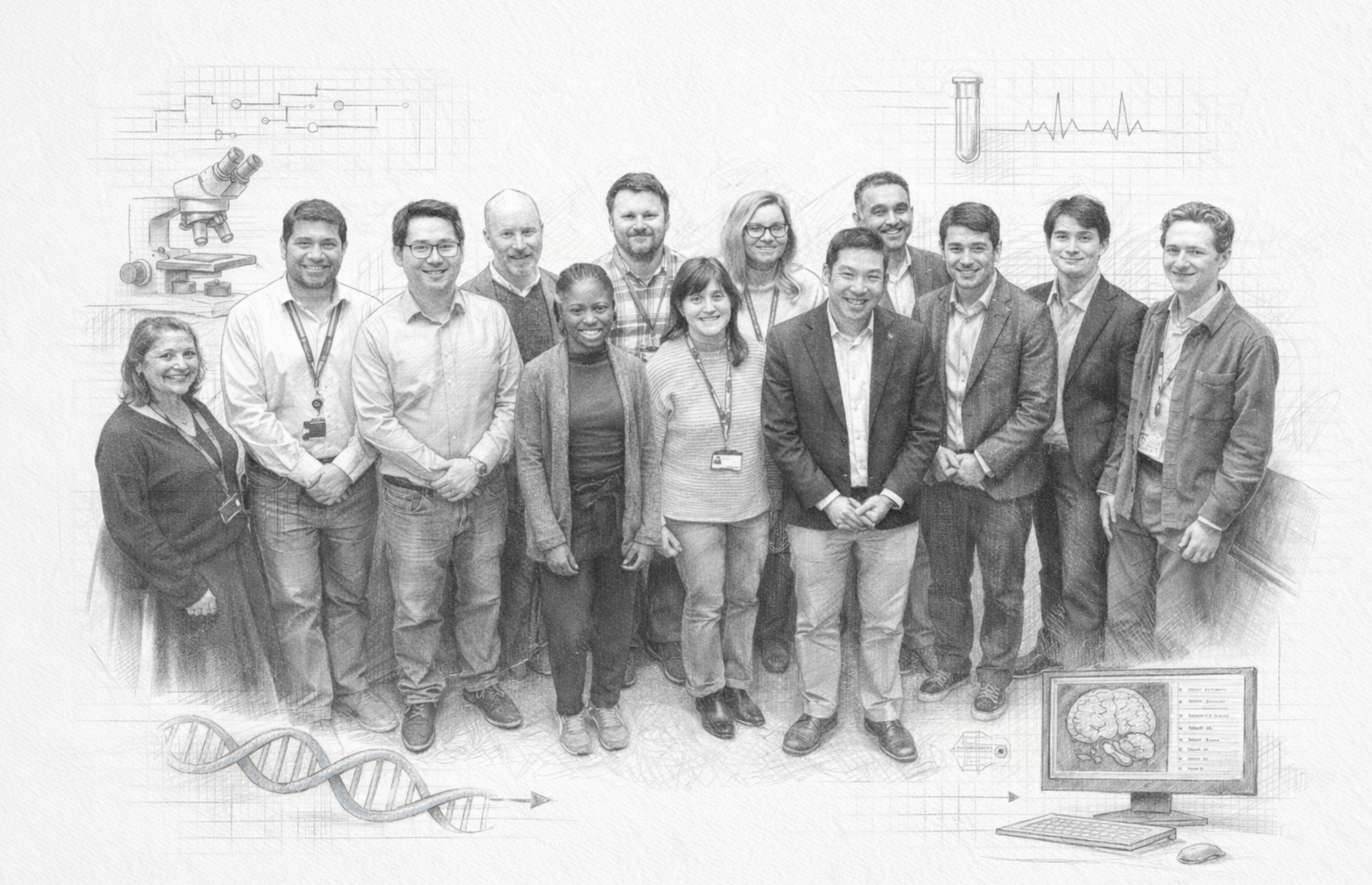
We are honoured to be part of this moment. The Cancer AI Scientist Project, hosted at the University of Oxford and resourced by ARIA, brings together some of the world’s greatest scientists, clinicians, and technologists to accelerate cancer vaccine research. By combining AI-driven discovery, automated experimentation, and deep biological insight, we are building systems designed to move faster, learn continuously, and translate breakthrough science into real patient impact.
From ARPA to ARIA, the arc now bends toward AI-driven science, and the potential benefit to cancer patients. It feels quietly historic and we are grateful to help share what comes next.


Comments