
Our Launch in January
Updated: Feb 7
We are lucky we stand on the shoulders of giants. The University of Oxford has a habit of changing medicine when the moment demands it. Again and again, when human health has faced its hardest questions, answers have emerged from these streets, libraries, and laboratories.
Penicillin moved from observation to world-changing therapy here, reshaping survival itself. The definitive link between smoking and cancer was established in Oxford, altering public health forever and saving millions of lives through evidence rather than assumption.
Decades later, when the world stood still in a pandemic, the Oxford–AstraZeneca vaccine showed what happens when scientific courage, clinical urgency, and national coordination align at speed. Each moment shared a common thread: Oxford stepping forward when progress needed both imagination and resolve.

That background matters, because today’s challenge is no smaller. Cancer remains one of the defining medical problems of our time. We understand its biology better than ever, yet translating that knowledge into durable, preventative, and personalised treatments still takes far too long. Cancer vaccines promise a fundamentally new way of treating disease by training the immune system to recognise and destroy tumours. The science is compelling, the early signals are strong, and the opportunity is real. The bottleneck has been speed. Discovery moves slowly when hypotheses, experiments, and analysis live in separate worlds.
This is where the story turns. The launch of the AI Cancer Scientist at the University of Oxford represents a deliberate attempt to rethink how medical discovery itself is done. Led from the Centre for Immuno-Oncology within the Nuffield Department of Medicine, and supported by funding from the Advanced Research and Invention Agency, the project asks a bold question: what if cancer vaccine discovery could run as a single, continuous loop rather than a fragmented relay?

The AI Cancer Scientist brings together three capabilities that have rarely been unified in medicine. First, advanced AI models that reason about tumour–immune recognition and propose vaccine targets. Second, automated laboratory systems that can rapidly test those ideas in immune experiments. Third, sovereign UK AI supercomputing that analyses results at scale and feeds them straight back into the next experimental cycle. Hypothesis, experiment, analysis, refinement, repeated at machine speed yet grounded in deep biological expertise.
At the heart of the system are automated research pods designed to let AI systems design, run, and learn from experiments continuously. The aim is focus. To concentrate scientific effort on the immune responses that matter most for patients and to compress years of iterative discovery into far shorter cycles while maintaining scientific rigour.
For Dr Lennard Lee, Associate Professor in Oxford’s Centre for Immuno-Oncology and a practising oncologist, the motivation is personal as well as scientific. In clinic, patients need better options sooner. In the laboratory, the pace of discovery still reflects an era before modern AI and automation. The AI Cancer Scientist is an attempt to close that gap, combining Oxford’s long tradition of medical leadership with tools that belong unmistakably to the future.
The decision to back the project reflects the scale of ambition. Cancer vaccine discovery is a demanding real-world test for autonomous scientific systems, where progress depends on reasoning, planning, experimentation, and learning under real constraints. Success here would signal something larger: a new way of doing science itself.
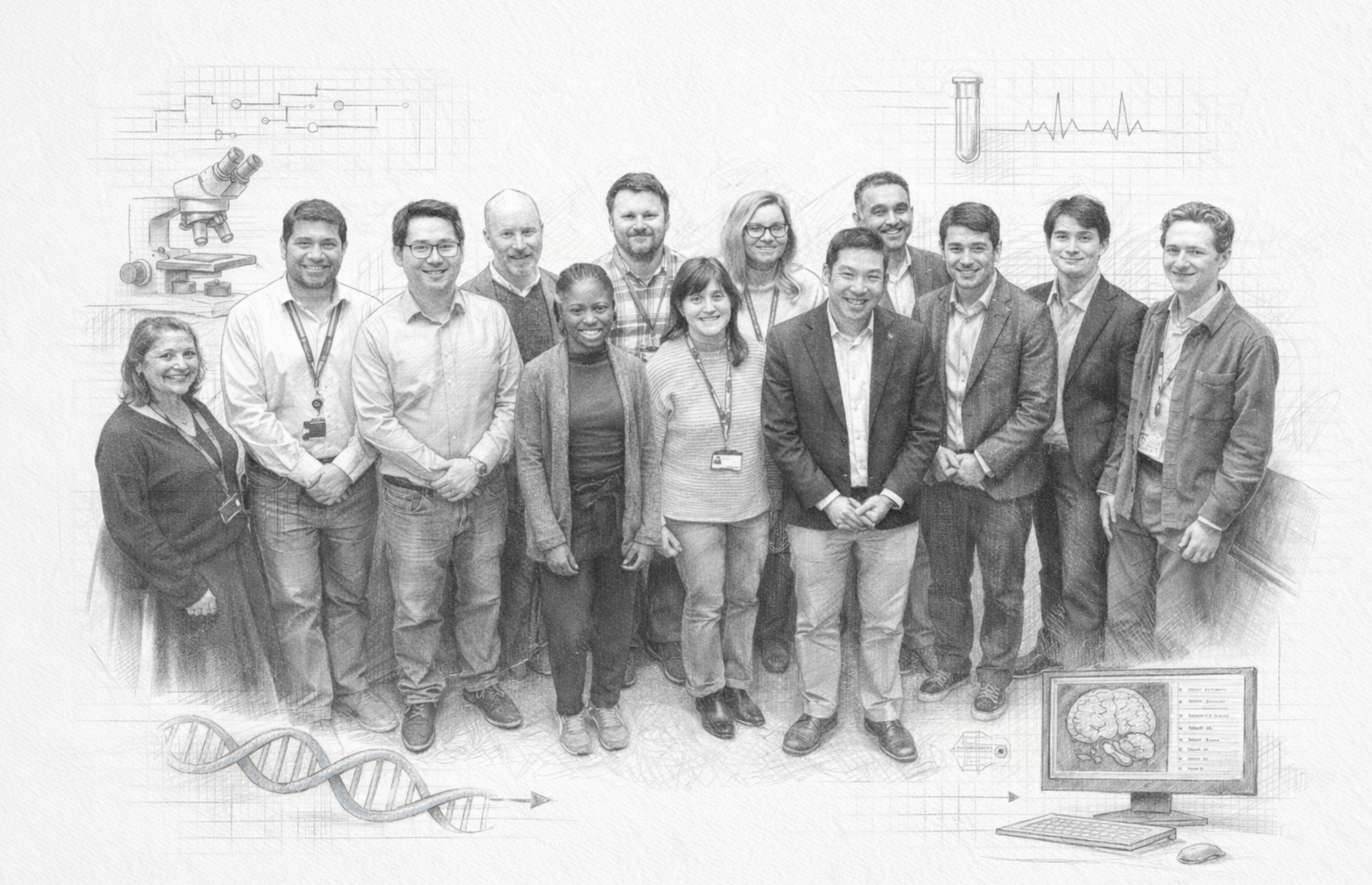
We have pulled together a truly exceptional team. The best from across the University of Oxford. People at the forefront of immunology, professional services and AI.

There is a quiet symmetry to this moment. Just 6 years, a similar team stood facing a global pandemic, and they developed a vaccine that changed the world. And seventy years before that, a small satellite crossing the sky signalled the start of a new scientific age.
Today, in Oxford, another inflection point is taking shape.
From penicillin, to cancer prevention, to pandemic vaccines, and now to AI-driven cancer vaccine discovery, the story is one of accumulated courage. This project does not replace Oxford’s history. It builds on it. And like those earlier breakthroughs, its impact will be measured in lives changed.


Comments